
Australia’s Last Frontier
By Sarah Etinas

Australia’s Last Frontier
By Sarah Etinas
Venture off the beaten path with Seabourn to The Kimberley region of Australia.

Sometimes called Australia’s Final Frontier, The Kimberley is prime for adventurers looking to explore the path less traveled. Much of the area is inaccessible by road, but Seabourn’s unique sailings make it easier than ever to explore Western Australia’s northernmost region. Dive into this wilderness gem, where nature, wildlife, and aboriginal culture continue to thrive.
Nature at Its Most Untouched
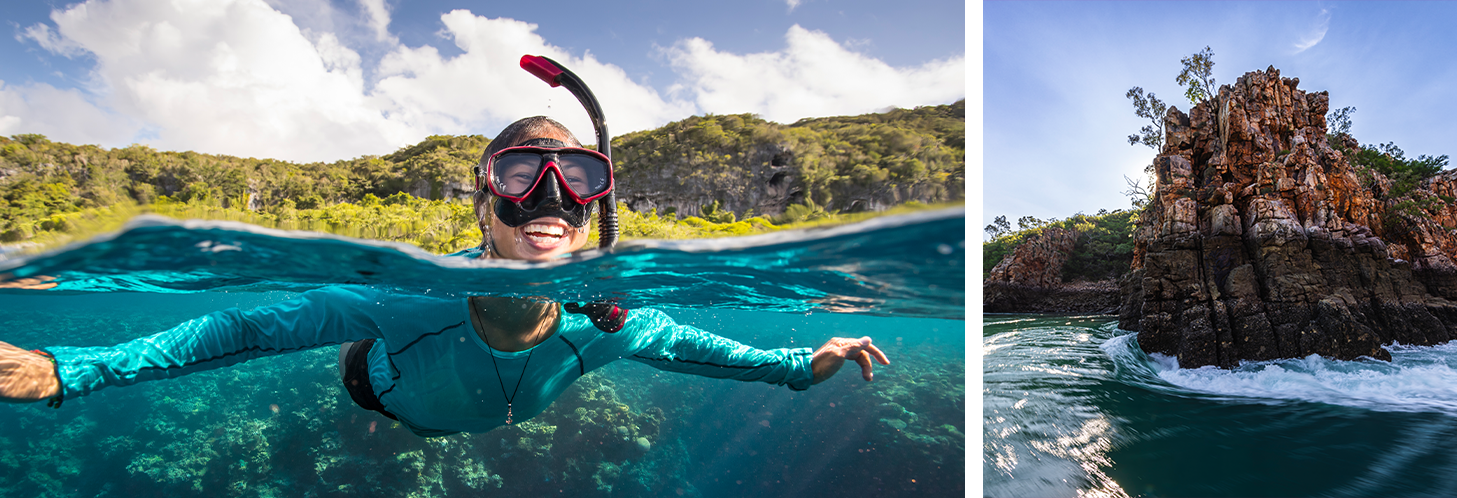
As one of the most rugged parts of Australia, The Kimberley feels particularly special. It’s where beaches feel more remote, red sandstone cliffs feel more dramatic, and crashing waterfalls feel more awe-inspiring. At every stop on a Seabourn voyage in The Kimberley, you’ll get to experience another piece of this jaw-dropping natural puzzle. Snorkel amongst loggerhead turtles and blacktip reef sharks at Ashmore Reef and helicopter over the three-tiered Mitchell Falls. Spot the unique beehive-shaped rock formations known as the Bungle Bungles and take a Zodiac® cruise for a view of the aptly named Horizontal Falls in Talbot Bay, where tidal currents seem to make water defy the rules of science. And when night falls, stargaze up at the shockingly clear sky—using Seabourn’s complimentary Swarovski Optik binoculars, of course—from just about anywhere in this remote region.
Wandering Wildlife
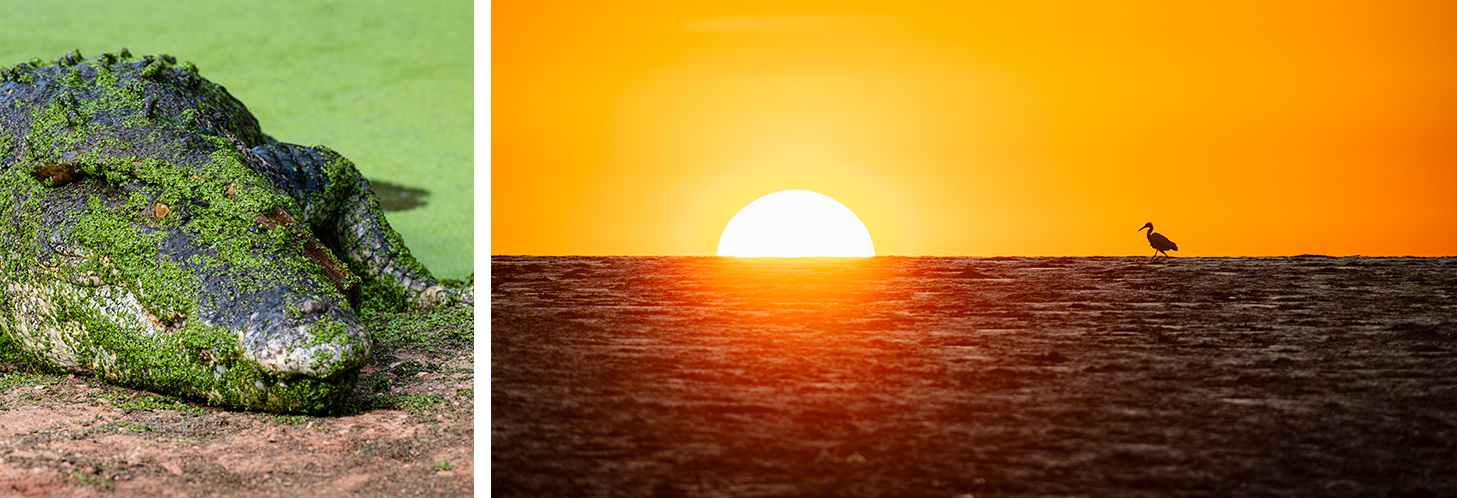
Amongst the thick-trunked boab trees and sandstone cliffs, the region’s wildlife is flourishing. Keep your eyes peeled for scaly-tailed possums and short-eared rock wallabies, echidnas and frilled-neck lizards. Below the surface, there’s a whole new world of creatures waiting to be spotted. Saltwater crocodiles are the most fearsome of the bunch, boasting the strongest bite of any living animal, while dugongs, pudgy manatee-like mammals, calmly and lazily snack on seagrass nearby. Don’t forget to look up towards the sky, where hundreds of bird species flit about, from the white-bellied sea eagle to the elusive and multicolored Gouldian finch.
Aboriginal Culture
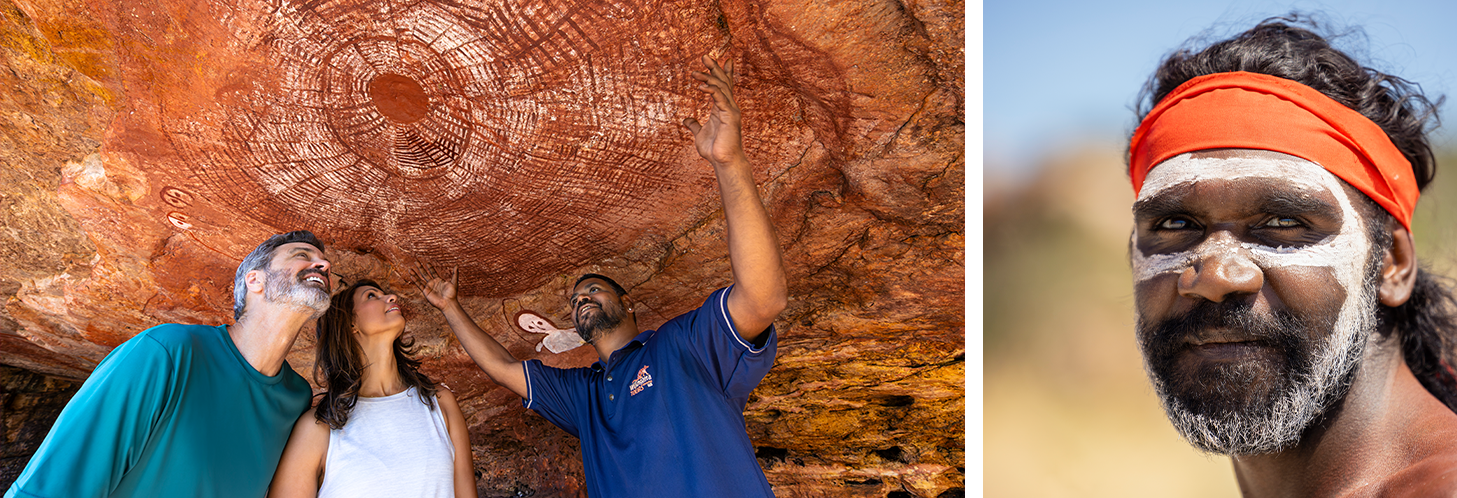
While the flora and fauna are two pieces of The Kimberley’s beauty, the region’s aboriginal culture is another. There are dozens—if not hundreds—of native tribes that have called this region their home for thousands of years. They’ve preserved the natural beauty that exists today, while still maintaining their rich cultures.
With a Seabourn sailing, you’ll get to experience a taste of aboriginal culture, specifically that of the Wunambal Gaambera people. Take part in a face-painting ceremony, learn about a traditional smoke ceremony, and hear their “Dreamtime stories”—their version of the creation story—just to start. You can even see their impact on the landscape, making visits to spot their thousands-year-old pictographs, now known as the Gwion Gwion (or Gyorn Gyorn) Bradshaw rock paintings, drawn onto the red sandstone walls. These surprisingly elaborate artworks feature people wearing headpieces and tassels, or carrying boomerangs and spears, all of which are still visible so many centuries later.

“With a Seabourn sailing, you’ll get to experience a taste of aboriginal culture, specifically that of the Wunambal Gaambera people.”
As an added thoughtful touch, Seabourn made aboriginal Wunambal Gaambera people the godparents of Seabourn Pursuit, the ship that sails all around this beautiful region.

Want to keep reading?
 I have always been a Geography and Map Fanatic. I own a very large and well-utilized National Geographic Atlas in which I have recorded many notes and personal trips and routed out my journeys by ships, planes, trains, and cycling. I refer to it frequently in putting together my clients' trips and itineraries, as well as my own.
Going back to the time when I was a little girl, I have either lived just a few yards from the ocean or relatively close to it. I liked watching ships and wanted to know what life was like on the other side of the ocean. I was fascinated that my Grandmother came to the US on a ship as a teenage girl together with her sister from Ireland. Before my grandparents met in the US, my Grandfather from Ireland worked as a cowboy and copper miner in Montana at the turn of the 20th Century. They had many National Geographic issues at their home which I loved looking at. These impressions, plus taking my first cruise, all eventually led me to the cruise and travel ...
I have always been a Geography and Map Fanatic. I own a very large and well-utilized National Geographic Atlas in which I have recorded many notes and personal trips and routed out my journeys by ships, planes, trains, and cycling. I refer to it frequently in putting together my clients' trips and itineraries, as well as my own.
Going back to the time when I was a little girl, I have either lived just a few yards from the ocean or relatively close to it. I liked watching ships and wanted to know what life was like on the other side of the ocean. I was fascinated that my Grandmother came to the US on a ship as a teenage girl together with her sister from Ireland. Before my grandparents met in the US, my Grandfather from Ireland worked as a cowboy and copper miner in Montana at the turn of the 20th Century. They had many National Geographic issues at their home which I loved looking at. These impressions, plus taking my first cruise, all eventually led me to the cruise and travel ...